Art Exploration Projects
Each week, one day a week at Golestan is allocated to art exploration projects. There are a few things to be mindful of in carrying out the art exploration projects that will make a big difference in the effectiveness of the project. Important things to remember:
- Art exploration is not about modeling or copying a piece of art, nor is it about creating something beautiful. In fact, the end product is of no importance, it is the actual process of creating that enables the learning and magic to occur.
- The goal here is for children to experiment with different types of materials. These are applied to drawing, collaging, painting, and sculpting. The children should be free to do what they want, with no limits or restrictions. In fact, they should be encouraged to experiment and test to their hearts’ content. “How would this thick paint look if you used the thick brush verses the thin brush verses your finger? How about the water color?”
- When drawing, please never ask the children to stay within the lines. It creates anxiety and hampers their creativity. On the contrary, you can encourage them to draw outside the lines.
- With the exception of gentle general sporadic direction, it is best not to direct children’s work. They should be free to explore and create independently.
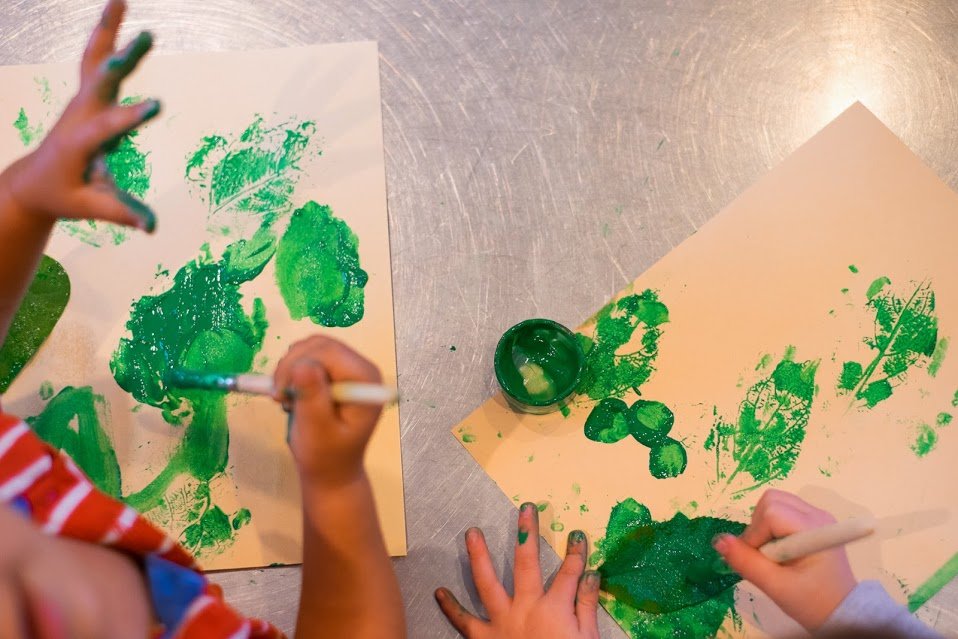
- It’s okay if the child gets messy – the messier work, the more authentic the experience.
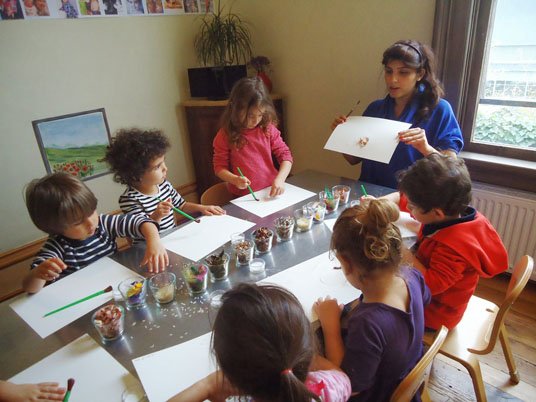
- Even though the children are allowed to do their art exploration without any limiting structure, the project set up needs to be meticulous. All materials should be presented in a simple and orderly way – and always set up before the children enter the classroom.
- Materials can also be introduced one by one. For example, if the children are painting fallen leaves with tempera paint and the theme of the day is autumn (monthly theme of seasons) you can introduce the colors one by one; first yellow, after a while red, etc. If they are experimenting with different mediums or tools, you can choose to introduce those in a structured and thoughtful manner. For example they may start with cotton balls then progress on to paintbrushes of degreed thickness. Conversely, all the tools and materials can be presented for them to select and use freely.